Size & Fit Guide
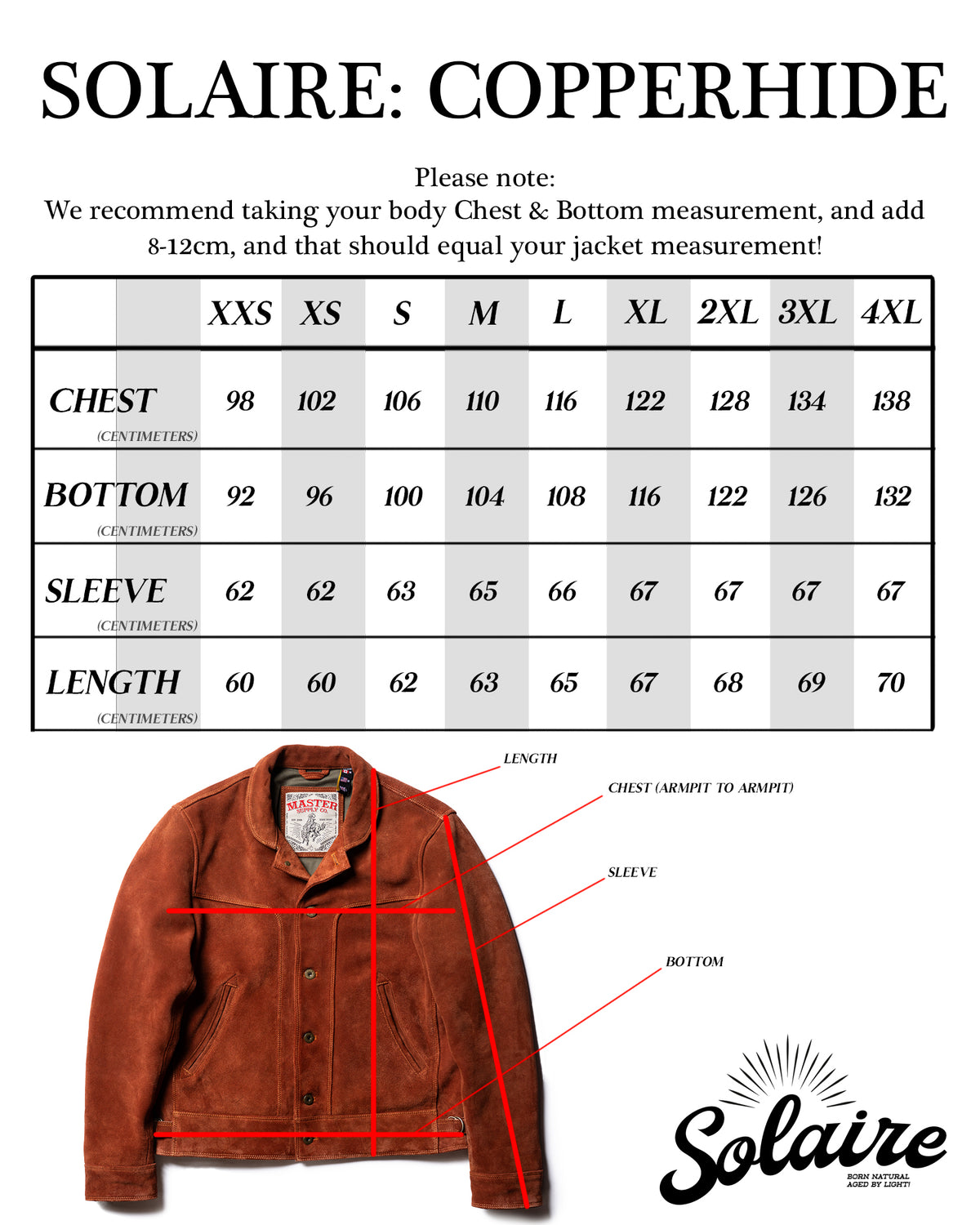
Choosing the right size is simple. Start by measuring your body chest and add 8–12 cm for comfort and natural movement. Then compare that number to the jacket measurements in the chart below.
Start Here
1. Measure your body chest at the widest point (around the chest just under the arms).
2. Add 8–12 cm for comfort and natural movement.
3. Choose the jacket size with a chest measurement closest to that number in the chart below.
Example
Body chest 100 cm
Add 8–12 cm for comfort and layering
Target jacket chest 108–112 cm
Recommended size Medium
Most customers choose a jacket chest measurement that is 8–12 cm larger than their body chest.
Quick Body Chest Guide
Measure your body chest at the widest point, around the chest just under the arms.
Use the quick reference below to estimate your size.
• 35–37 inch body chest → XS
• 37–39 inch body chest → Small
• 39–40 inch body chest → Medium
• 41–43 inch body chest → Large
• 43–45 inch body chest → XL
• 45–47 inch body chest → 2XL
• 47–49 inch body chest → 3XL
• 49–51 inch body chest → 4XL
If you are between sizes, choose the smaller size for a trimmer fit or the larger size if you plan to layer underneath.
Real Fit Examples
The examples below show typical sizing references. These are general guidelines, as body proportions can vary.
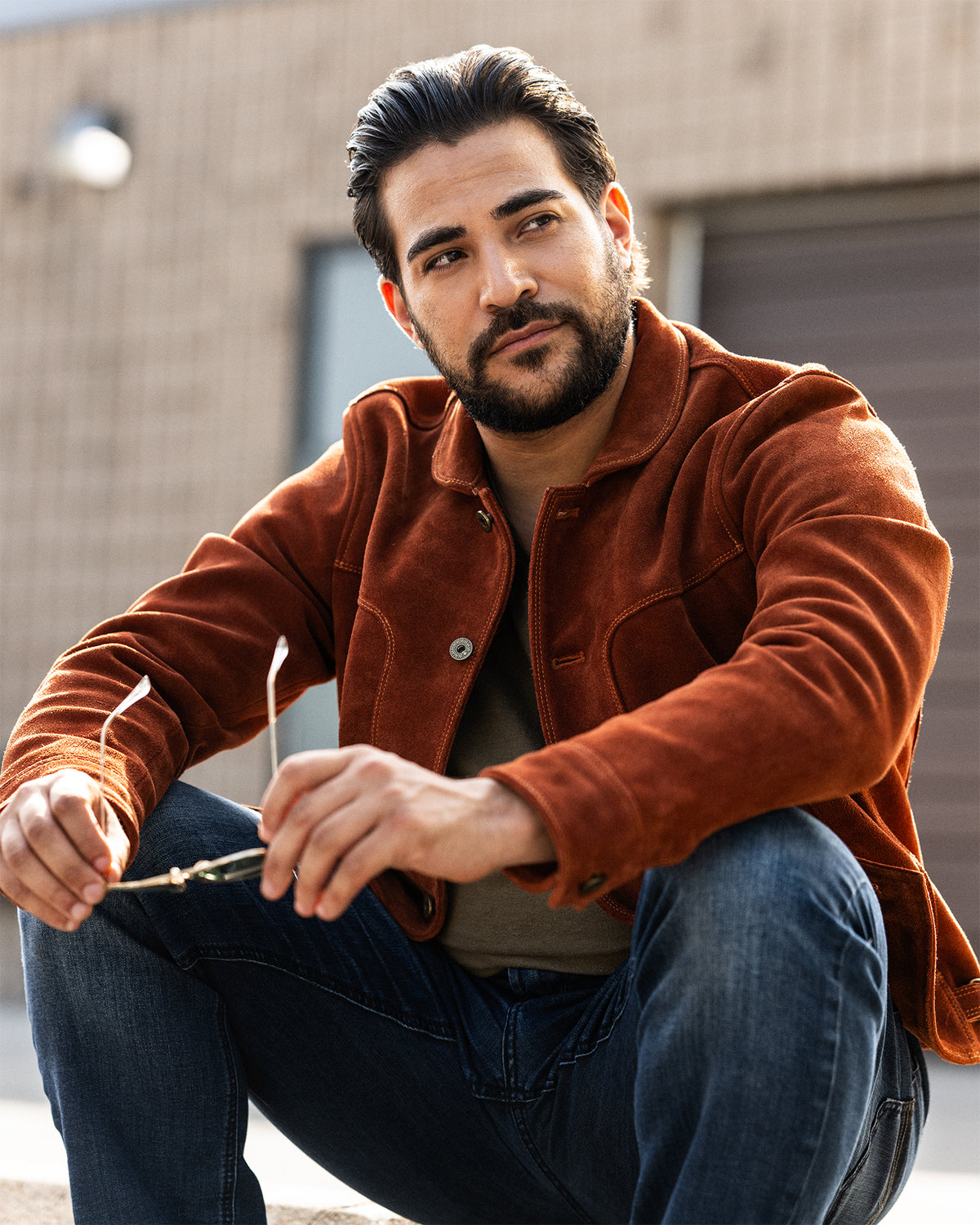
• 5’8”, 165 lbs → Medium
Athletic or average build with light layers.
• 5’10”, 175 lbs → Medium
Average athletic build with a T-shirt or flannel.
• 6’0”, 190 lbs → Large
Broader shoulders or moderate layering.
• 6’1”, 205 lbs → XL
Larger build or heavier layering.
• 6’2”, 220 lbs → 2XL
Broad build with comfortable room for layers.
These examples assume a standard fit with approximately 8–12 cm of ease.
Most Reliable Sizing Method
Many experienced leather jacket buyers prefer this method.
Measure a jacket you already own that fits well, then compare those measurements directly to the garment measurements in our size chart.
Focus on comparing:
• Chest
• Shoulder width
• Sleeve length
• Jacket length
This method removes guesswork and is often the most accurate way to determine sizing.
Size Chart Disclaimer
Our size charts reflect the exterior measurements of each jacket, not the internal space available once you factor in the lining and room for clothing.
To ensure a proper fit, you must add extra centimeters to your actual body measurements. This additional room is called ease, and it allows for comfort, movement, and layering.
General Sizing Guidelines
Measure your chest and bottom at the widest point. This may be your chest or stomach, whichever is larger.
Use the guide below to determine how much ease to add depending on your preferred fit.
Slim Fit
Add 6–8 cm to your body measurement.
Suitable for light layers such as T-shirts or henleys.
Standard Fit
Add 8–12 cm to your body measurement.
Suitable for layering over shirts or hoodies.
Relaxed Fit
Add 12–15 cm or more to your body measurement.
Provides a looser, relaxed fit.
If you are between sizes, we generally recommend choosing the larger size for comfort, especially with heavier leathers or lined jackets.
Special Considerations for Vests
For vests, less layering space is typically required.
• Add 2–4 cm to your chest and bottom measurements for a fitted look
• Add 4–6 cm for a standard fit
Measurement Instructions
Chest Measurement
Use a soft measuring tape, not a metal one.
Wrap it around the fullest part of your chest, just under your armpits, while standing relaxed with good posture.
The tape should sit snug but not tight.
Bottom Measurement
Measure around the widest part of your waist or stomach, whichever is larger. This ensures the jacket can zip or button comfortably.
Sleeve Length
Measure from the tip of your shoulder or clavicle down to where your wrist meets your hand.
Your height often correlates with sleeve length, so keep this in mind if you are taller or shorter than average.
Additional Tips
- Always add the recommended ease before referencing the size chart.
- For broader builds or heavier layering, use the higher end of the ease range.
- Having someone assist with measurements can improve accuracy.
- Measuring a jacket you already own is often the most reliable sizing method.
Note:
Our jackets are handmade, so please allow for a ±1 cm variance.
If you need assistance with sizing, feel free to reach out through our Contact Page. We are always happy to help.